Celebration guide
DIY Cookies for a Playdate: Planning a Small Group Activity
Organise a small cookie-decorating playdate with individual workspaces, manageable materials and clear turns.
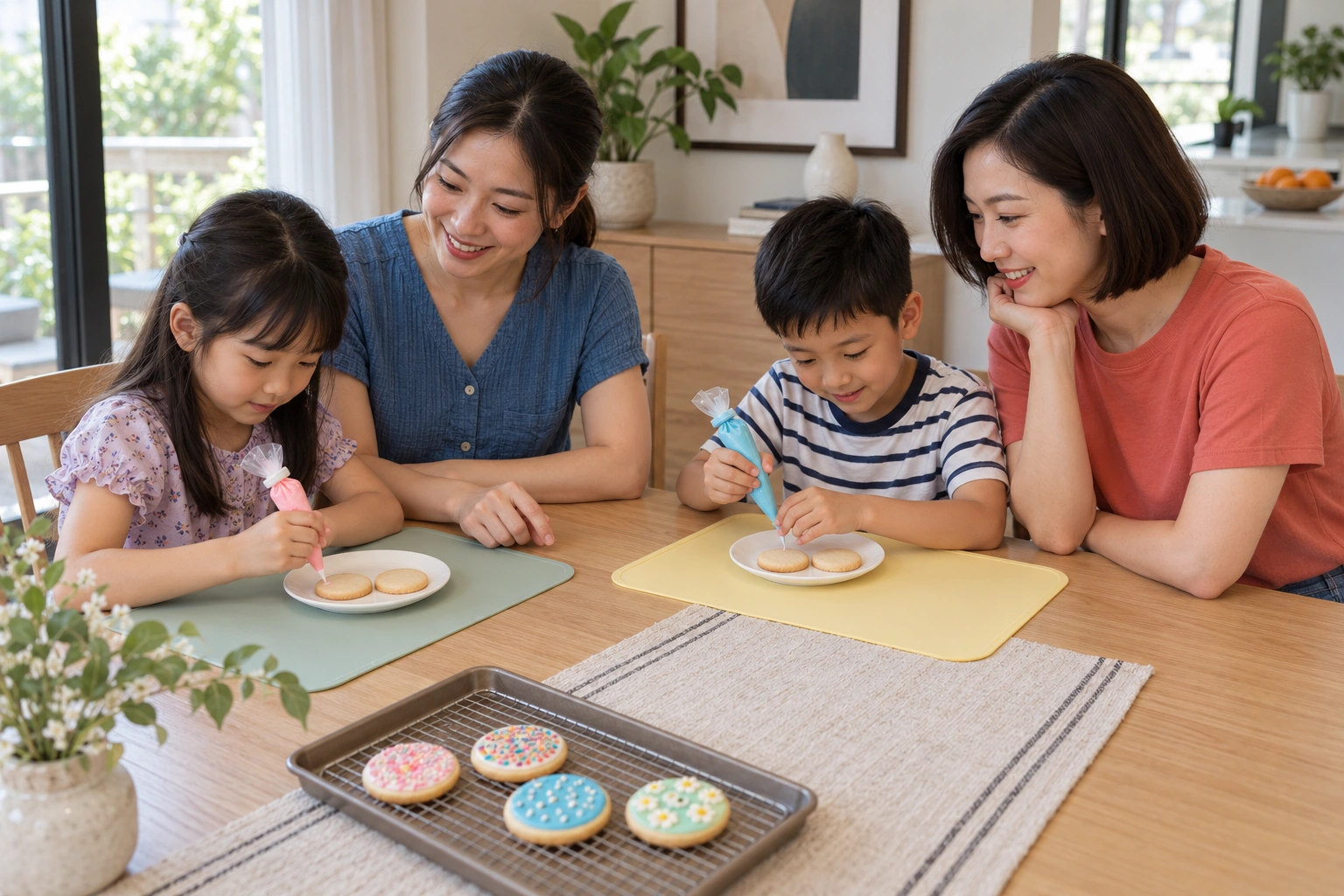
A cookie-decorating playdate feels easier when each child understands their workspace and which materials they can use. For a small group from two families, the main challenge is often not the amount of decoration. It is sharing, passing materials and accommodating different working speeds.
Begin with the children actually taking part, then choose materials and adult support around their needs. A relaxed home visit does not require the structure of a large event. A manageable table and clear allocation can give children more room to experiment.
Agree the activity with the parents
Before purchasing, confirm who will participate, any ingredient requirements and whether the children have decorated food before. This helps plan the activity and support without assuming everyone has the same ability.
Explain that the aim is to try the activity and enjoy it, rather than produce matching cookies. If one family wants to take the results home, agree that early so containers and identities can be prepared. Avoid dividing everything only after children have understood their creations as shared.
For particular ingredient requirements, examine product information before committing to the activity. A theme name or icing colour does not explain the full composition. Parents should decide using relevant information rather than the host’s assumption.
Choose materials with an allocation plan
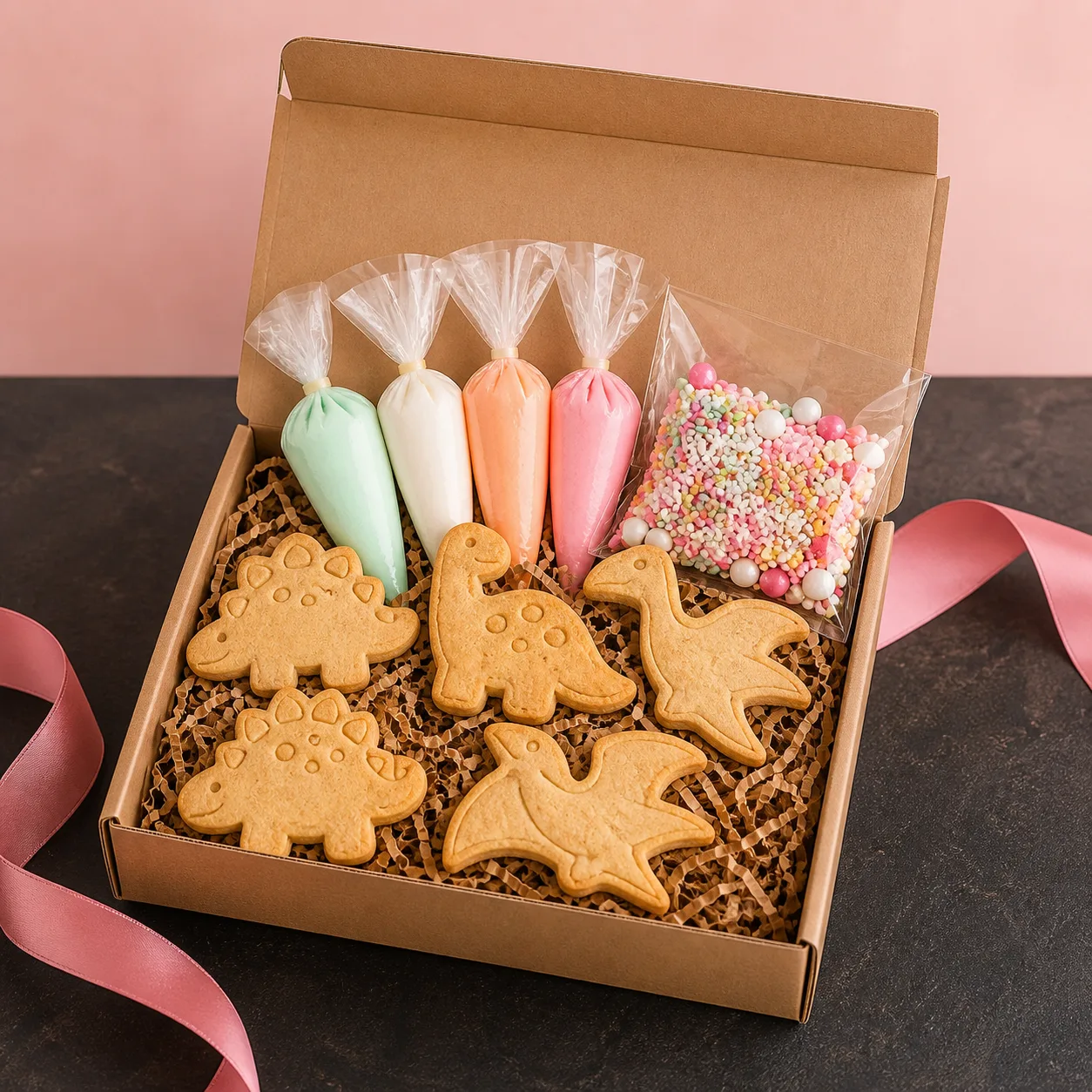
Sweetalicious lists DIY Cookies Activity Kit options to match the planned activity. The Medium description includes five cookies and four icing colours; Large includes ten cookies and six colours, with sprinkles. Confirm the current option and contents before ordering.
Cookie quantity does not automatically determine an ideal number of children. Decide how many each child wants to try and whether some are reserved for practice. Do not promise everyone every colour at once if materials will be shared in turns.
A small plan might allocate an agreed number to each participant and retain the remainder for a later stage. This is an activity arrangement, not a Sweetalicious package rule or facilitation service. Adapt it to the actual group.
Arrange turns and materials for each child
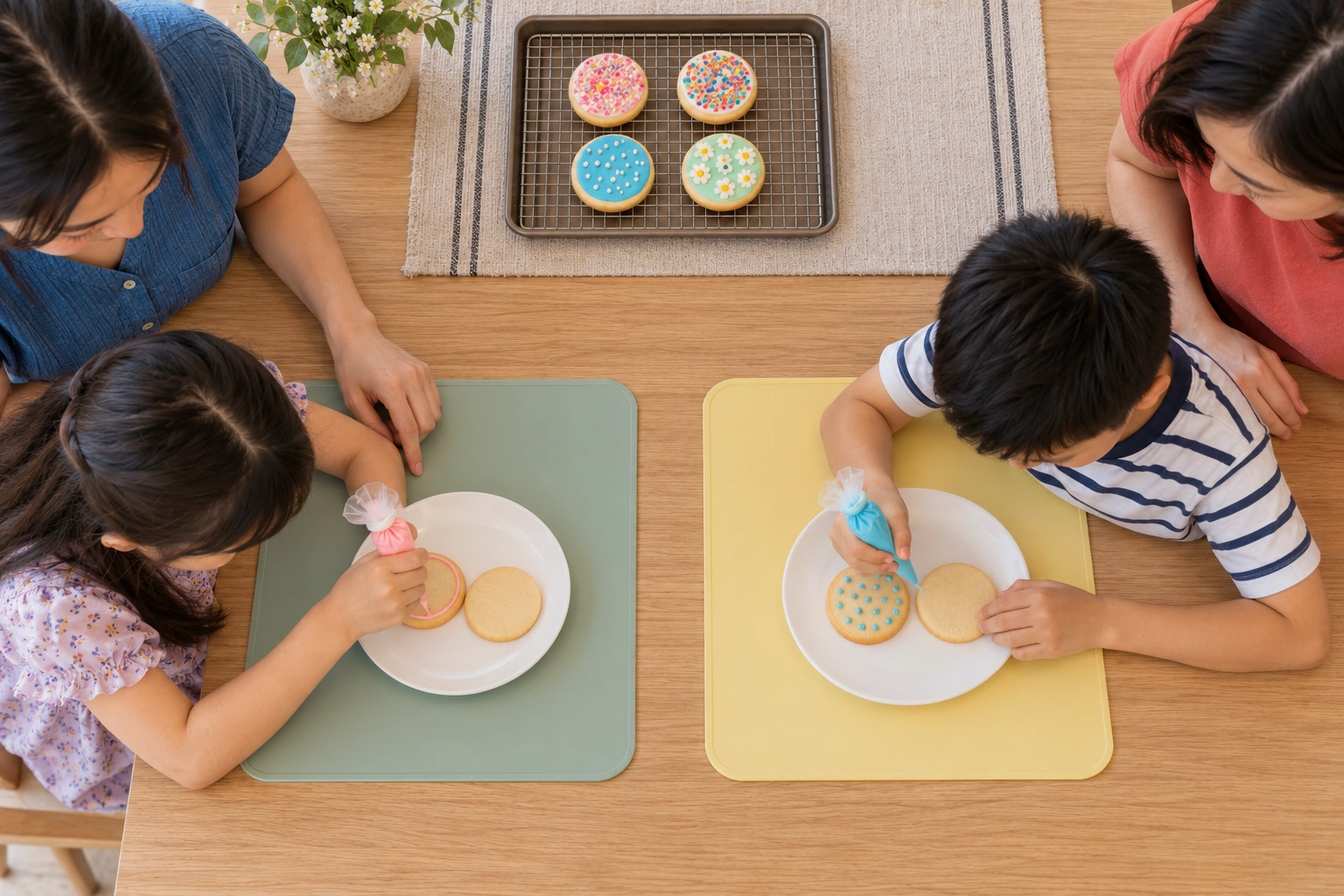
Prepare a work surface and a place for each child’s finished pieces. Put individually allocated materials in that child’s area. Keep shared materials separately so participants can recognise what needs to be requested in turn.
Show a simple way to ask for a colour or tool. An adult can help transfer materials instead of letting the table fill with reaching hands. If food materials need dividing into other containers, use appropriate food-contact containers and utensils and handle them properly.
The PBS Parents cookie-decorating station offers an activity-setup reference. For this playdate, concentrate on individual space and turns. There is no need to reproduce every decorative element from another example.
Begin with one shared trial
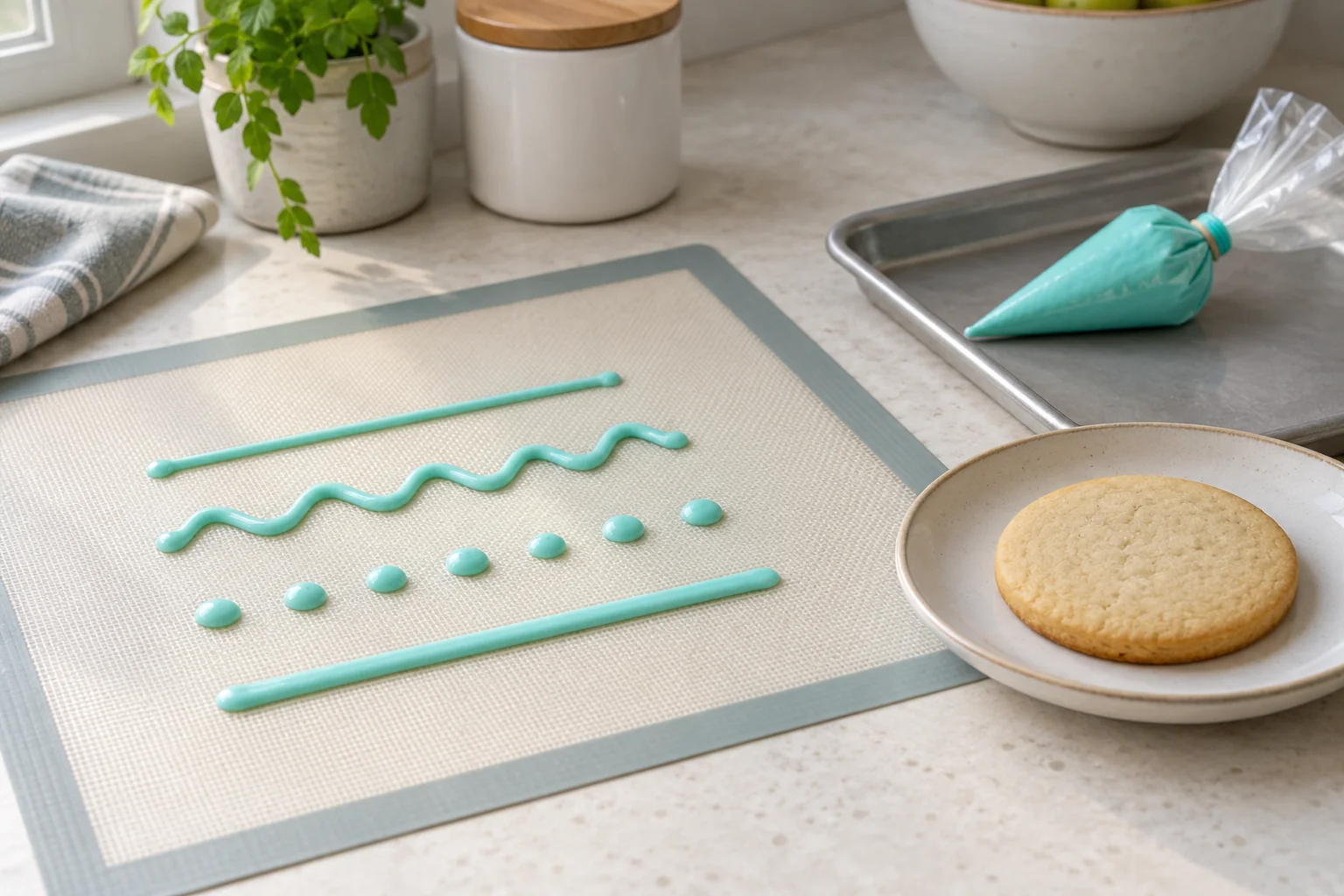
Demonstrate one simple action, such as making a short line on one cookie. Give children an opportunity to try with appropriate support. Avoid a long demonstration that loses their attention before the materials reach them.
Then let their choices develop. One child may want a pattern while another prefers free colour combinations. Do not continually correct their work to resemble the example, while still maintaining suitable material handling and support.
If a material does not behave as expected, pause and help investigate. Do not simply ask a child to press harder without identifying the problem. Adults can adjust handling according to the product information and the equipment’s condition.
Allow for different working speeds
A child finishing early can have a simple closing activity, such as choosing where to place the result or describing its pattern. Avoid letting them take another participant’s materials merely because they are waiting. A slower participant still needs room to finish their choice.
A contest or scoring system is unnecessary. Comparing outcomes can create pressure when abilities differ. A question such as “which part would you most like to tell us about?” brings attention back to the child’s process.
If a child wants to stop, organise their move away without disturbing someone else’s materials. Adults should still know which results belong to whom and which materials remain unused. That small plan helps the gathering end calmly.
Finish with clearly identified results
Separate each child’s cookies and follow the product’s handling information before taking them home or eating them. Do not stack the results just to clear the table quickly. Use suitable containers and external name labels where needed.
Before families leave, match the results with their owners and pass relevant product information to the parents. A group photograph is optional; obtain the families’ agreement before sharing children’s images or work displaying their names.
Read the DIY cookie activity walkthrough for the general sequence. Explore Sweetalicious, then confirm the product and required date. A successful small playdate gives each child space to experiment without making the distribution of materials confusing.