Celebration guide
Meringue and Marshmallow: Understanding Texture and Ingredients
Compare meringue cookies and marshmallows through texture, common ingredients, serving roles and product-specific information.
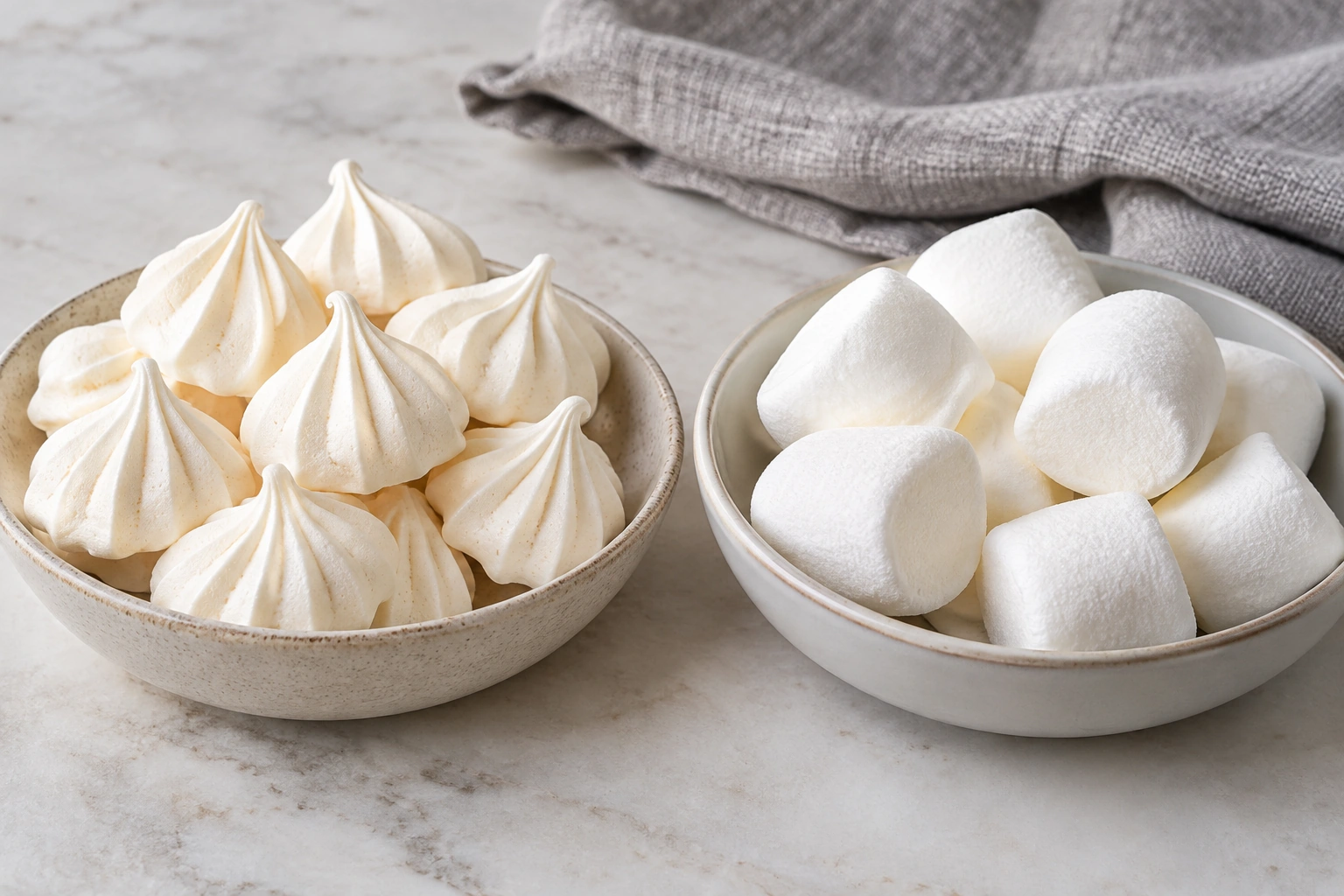
Meringues and marshmallows can both look light and softly coloured, but their textures and ingredients differ. Dried meringue cookies are generally crisp and brittle, while marshmallows are usually springier and more flexible. Choose for the eating experience you want, then check the actual product information.
A pale appearance or sweet taste is not enough to equate them. Product names, methods, additions and storage instructions vary. This comparison helps with choosing sweets rather than assigning one composition to every brand.
Compare texture rather than their shared pale appearance
Meringue commonly begins as a foam made from egg whites and sugar. Dried into cookies, it can become porous, brittle and crisp. A soft meringue topping does not necessarily share the texture of those cookies.
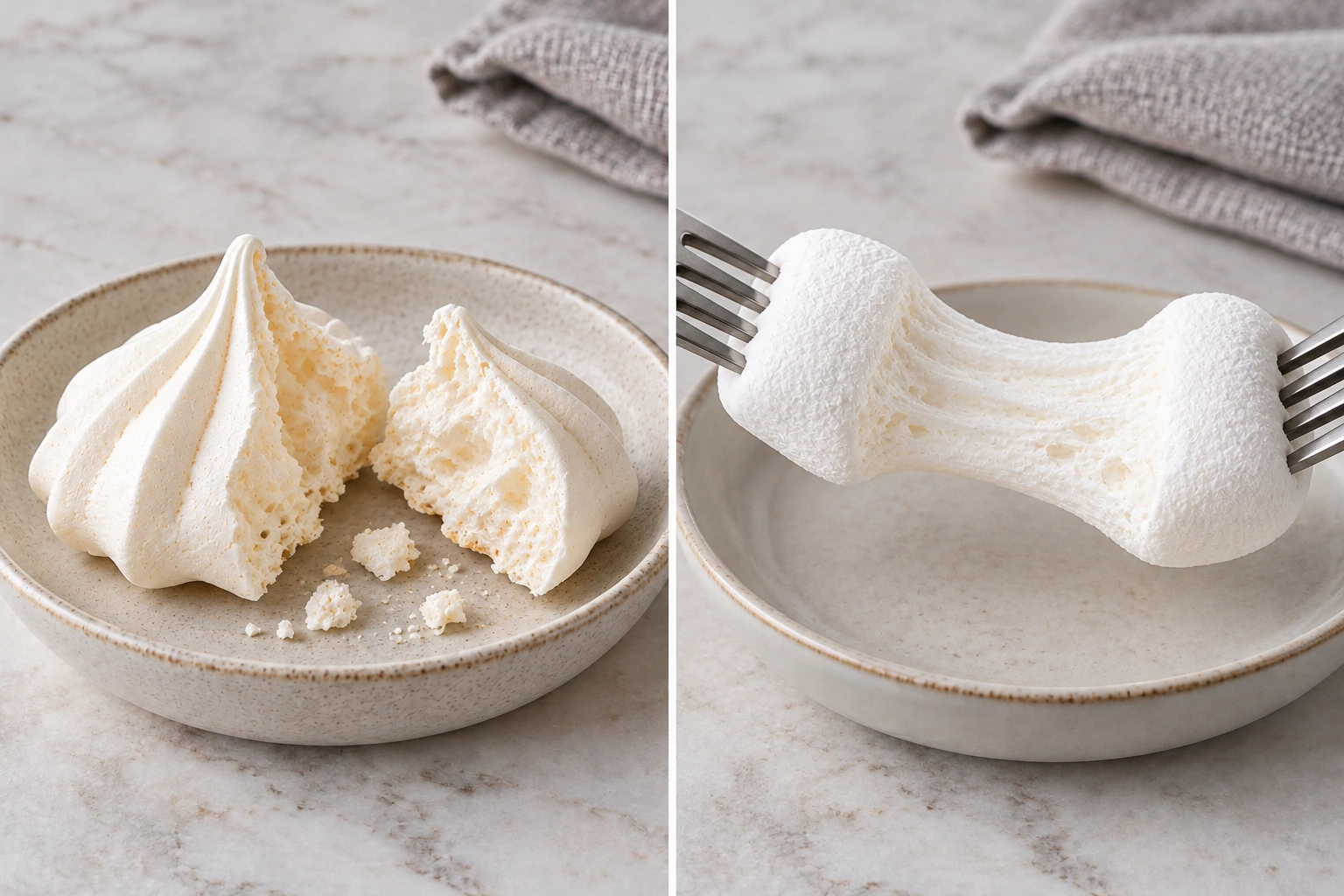
The American Society of Baking explains meringue’s basis. For marshmallows, the American Chemical Society describes a sugar foam commonly stabilised with gelatin, as well as alternative ingredient approaches. Not every marshmallow therefore has an identical formulation.
The eating response differs: dry meringue tends to break, while marshmallow may spring back or stretch. A broken-surface comparison helps show that difference, but ingredient questions still require product information.
Choose from the sweet’s role on the table
Meringue cookies provide a different crisp-snack experience from chewy confectionery. Marshmallows may better match a desired flexible texture. Do not substitute one for the other merely because their size or colour seems similar.
Consider how guests will take the sweets. Brittle food needs placement that avoids crushing. Sticky or flexible items may need different utensils and separation. Check the packaging actually offered.
| Consideration | Question before choosing |
|---|---|
| Texture | Is the aim crisp, brittle or chewy? |
| Role | A snack, decoration or part of another serving? |
| Size | How will portions be shared? |
| Packaging | Is the product protected during travel? |
| Ingredients | What information does the recipient need? |
| Storage | What instructions apply to the selected product? |
Use the table to explain the requirement, not invent a specification. Flavours, colours and sizes in one photograph are not automatically available at all times.
Read ingredients for the particular product
Ask about the selected item’s composition when eggs, gelatin, dairy or another ingredient matters. Do not decide suitability from “meringue” or “marshmallow” alone. Recipes and handling environments differ between producers.
Halal information or other dietary requirements need appropriate product evidence too. A general explanation of ingredients does not establish the status of one SKU. Identify the product clearly when asking so the answer does not refer to another item.
For a group order, gather relevant requirements without promising that everyone can eat the same sweet. Resolve ingredient questions before selection rather than after gifts have already been distributed.
Follow storage instructions rather than texture-based guesses
A dry-feeling product can still be affected by humidity. A chewy one does not have identical keeping properties in every package. Use the producer’s guidance on containers, conditions and handling after opening.
Do not derive shelf life from a general article or experience with another brand. If sweets will be taken outdoors, explain the setting and handover time when consulting. A table cover does not resolve every storage requirement.
For gifts, pass on the information the recipient needs. Attractive packaging should still allow them to identify the product and find important handling instructions, particularly if the gift passes through another person.
Connect the choice to real products
Sweetalicious’s product information describes French Meringue Cookies as light and crisp and lists Meringue Party Cones for favour presentation. Current product choices, colours and event requirements still need confirmation through the active ordering channel.
If you want marshmallows specifically, ask whether they are available. Comparing sweets in this article does not mean Sweetalicious supplies every confection discussed. Keep the conversation focused on the texture and intended use.
When requesting several products, name each separately rather than using “white sweets” as one category. A clear list helps the seller answer ingredient, packaging and quantity questions for the right item. It also makes checking the received order easier.
Separate a decoration requirement from food intended to be handed out. An item chosen for its shape may not give the desired snack texture. Explain both purposes before accepting a substitution so the comparison goes beyond a similar colour or displayed price. This helps keep the chosen product connected to how it will actually be enjoyed.
See meringue cones for parties when planning servings or favours. When contacting Sweetalicious, explain the quantity, date and ingredient requirements. Texture, serving purpose and confirmed product availability make the choice easier to discuss.